
The Evolution of AI Image Generation: What's Next in 2026?
We have moved past the era of random generation. The modern AI artist demands precision, layered outputs, and perfect typography. Here is where the technology stands today.
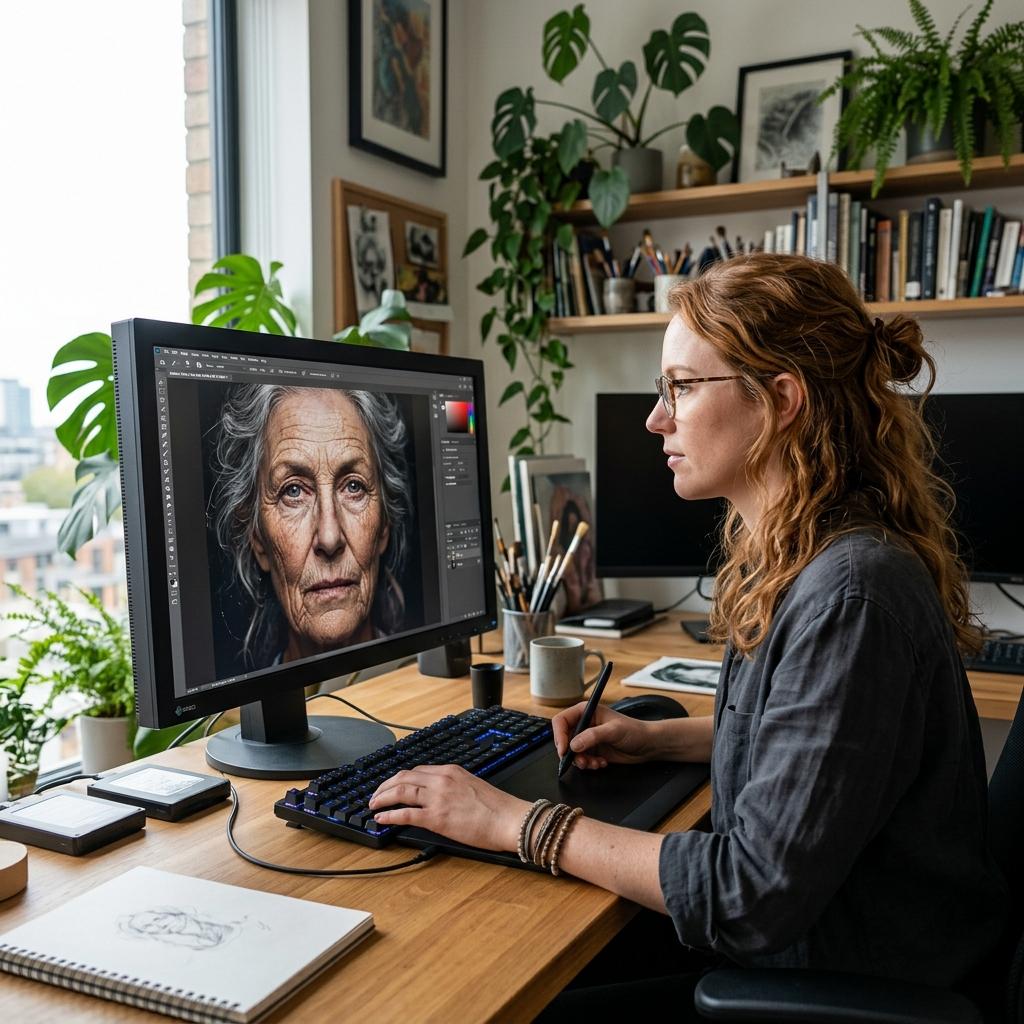
If you look back at AI-generated images from just a few years ago, they were a novelty. They were fascinating, but ultimately flawed. They struggled with human anatomy (especially hands), failed completely at rendering readable text, and were notoriously difficult to control. You typed a prompt and rolled the dice, hoping the AI understood your vision.
In 2026, the paradigm has shifted. The fidelity is so high that the core challenge is no longer "can the AI draw this?" but rather "how much granular control can the artist exert over the final output?" Let's explore the cutting-edge features that define professional AI image generation today.
Unprecedented Compositional Control
Prompting with text is a blunt instrument. If you want a character standing in the left third of the frame, looking up at a 45-degree angle, text alone often fails.
The new standard relies on spatial conditioning networks (advanced evolutions of ControlNet). Artists can now provide a rough 3D wireframe pose, a basic depth map, or even a quick stick-figure scribble. The AI uses this as a rigid scaffolding, ensuring that the generated elements fall exactly on your intended rule-of-thirds grid. This allows art directors to maintain strict continuity with storyboards and layout requirements.
Perfect Typography and Graphic Design Integration
Historically, diffusion models understood the visual shape of text, but not actual orthography. A sign that was supposed to read "COFFEE" would often come out as "COEFEE."
Modern hybrid models have integrated specialized text-rendering encoders. You can now prompt for a neon sign, a vintage movie poster, or a sleek corporate logo, and the typography will be flawless, legible, and stylistically matched to the surrounding environment. This has opened the floodgates for AI in mainstream graphic design and advertising.
True Layered Outputs and Vector Generation
Generating a flat JPEG or PNG is useful for concept art, but graphic designers and web developers need editable assets.
The latest generative models understand depth and object separation natively. Instead of a single image, they can output a structured PSD file where the background, the subject, the foreground elements, and the lighting effects are cleanly separated into labeled layers. Furthermore, specialized models can now generate clean, editable Vector Graphics (SVG), revolutionizing how we create icons, logos, and scalable web illustrations.
Real-Time, Low-Latency Generation
Perhaps the most magical development is the elimination of loading bars. Hardware acceleration and optimized model architectures (like advanced Latent Consistency Models) have dropped latency to mere milliseconds.
We are now experiencing true real-time image generation. The canvas updates instantly as you type your prompt or as you drag your digital brush across the screen. This creates a deeply improvisational workflow—a continuous creative feedback loop where the artist and the machine are literally "jamming" together.
Experience the Next Generation of Art
The era of rolling the dice with text prompts is over. Take complete control of your creative vision today.
Open Image Generator