
Top 5 AI Video Generation Trends You Need to Know This Year
The leap from glitchy novelties to broadcast-quality cinema. Discover the five defining technologies that are reshaping the video production landscape in 2026.
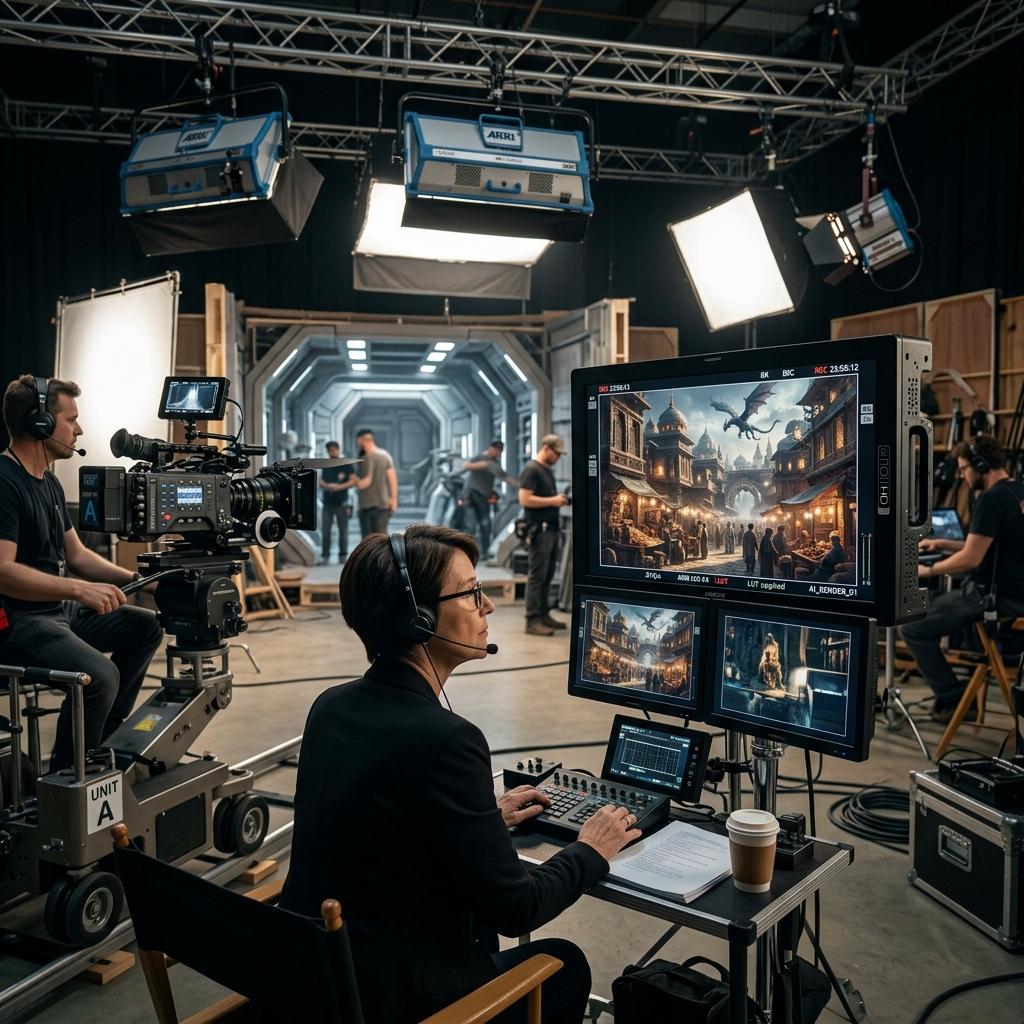
The video generation space is evolving faster than any other domain in artificial intelligence. Just two years ago, AI-generated video was characterized by surreal warping, inconsistent physics, and a maximum duration of about three seconds. Today, we are witnessing the birth of full-length, hyper-realistic, narrative-driven AI cinema.
Whether you are an independent filmmaker, a marketing executive, or a social media creator, understanding the current state of AI video is no longer optional—it is a core competency. Here are the top five trends dominating AI video generation in 2026.
1. The Death of the "AI Look": Hyper-Realism Achieved
Early AI video had a distinct, dream-like quality. Faces would morph slightly when turning, and background details would constantly shift. In 2026, the underlying diffusion and transformer models have mastered temporal consistency and physical simulation.
When you generate a clip of a woman walking through a rainy neon-lit street, the reflections in the puddles are ray-traced accurately. The fabric of her coat moves according to real-world cloth physics. The lighting interacts with her skin using proper subsurface scattering. For the average viewer, telling the difference between a high-end AI generation and actual Arri Alexa footage has become nearly impossible.
2. Real-Time 3D Rendering Integration (NeRFs and Gaussian Splatting)
Video is inherently 2D, but the real world is 3D. The biggest breakthrough this year is the integration of Neural Radiance Fields (NeRFs) and 3D Gaussian Splatting directly into video generation pipelines.
Instead of just generating a flat sequence of pixels, new AI models generate a full 3D volumetric scene. This allows directors to dynamically move the camera after the video has been generated. You can change a static wide shot into a sweeping drone shot, or adjust the focal length of the virtual lens, all without having to re-prompt the AI. This brings the flexibility of video game engines like Unreal Engine into the intuitive interface of text-to-video.
3. Perfect Character and Asset Consistency
Narrative filmmaking requires consistency. If your main character is a detective with a specific scar and a custom leather jacket, they must look exactly the same in scene 1 as they do in scene 50.
In the past, users had to rely on complex, unreliable workarounds (like endless negative prompting or aggressive LoRA training) to keep characters consistent. Now, "Character Lock" technology is built natively into platforms. You can define a character model once, and the AI will retain their exact facial geometry, clothing, and even specific micro-expressions across hundreds of unique generations, regardless of the lighting or environment.
4. Audio-Driven Video Synthesis (Lip Sync & Emotive Animation)
Silent video is only half the battle. The integration of audio and video generation has reached maturity. You can now upload a voiceover track—whether recorded by a human or generated by an AI voice model—and the video generation engine will automatically perfectly lip-sync the character on screen.
More impressively, the AI analyzes the emotional cadence of the audio. If the voice is shouting angrily, the character's body language, eyebrow movements, and posture will automatically adjust to match the aggression in the audio track. This creates performances that feel genuinely human.
5. Long-Form Generation and Context Windows
We are moving past the "10-second limit." Thanks to massive expansions in context windows, AI models can now generate continuous 2-to-5 minute scenes in a single prompt without losing the plot or drifting off-topic.
Furthermore, AI directors can accept a full 10-page script as input, automatically break it down into shots, and generate an entire short film sequentially, ensuring continuity of props, lighting, and time of day from the first frame to the last.
Direct Your Masterpiece
The barrier to entry for high-end filmmaking has fallen. Experience these trends firsthand in our Video Studio.
Open Video Studio